Salish Sea I - Vancouver
- Phil Smith
- Jun 28
- 3 min read

The Salish Sea encompasses a large area of the far northwest border between the continental United States and Canada. It is home to several variety of whales, seals, birds, humans and other wildlife.

It includes Puget Sound, where Seattle is, along with several US naval facilities. It incudes the Straight of Georgia, on which Vancouver, BC lies. It includes the San Juan Islands in the US and the Gulf Islands in Canada, which are spectacular.
There are more than 6 million people who live on its borders but it is also one of the places on earth where you could believe, for a moment, there are just a few of us and the whales or birds are the dominant species.
We spent 12 days there with the tremendous added bonus being that several of them were with our son and daughter-in-law. Formed by volcanos, rapid plate tectonics then millennia of glaciation, it is a truly magical place. We visited three incredible spots on the Salish that capped Part Three of our trip.
Our son and his wife live on the Kitsap Peninsula on west side of Washington's Puget Sound, but they suggested we meet in Vancouver, British Columbia, for a few days because we had never been there and it's a really cool place.
They were right. We entered Canada at the Peace Arch (not a very big arch but a nice memory of when the relations between the two governments were somewhat warmer). As you approach Vancouver, there is an noticeable difference from any city we've visited in the U.S. except perhaps New York. The high-rise apartment buildings are everywhere. The closer you get to the city center the more of them there are. Vancouver is Canada's third largest metropolitan area with nearly 3 million people living there.


There has historically been a significant East Asian population and influence there, especially Chinese and Japanese. Many of the apartment buildings are built with a lot more architectural freedom than you see in the U.S., which is reminiscent of photos I've seen of Hong Kong, Shanghai and Tokyo.
Our hotel was right downtown in the financial district, one of many skyscrapers. We could walk to the harbor and elsewhere, although it rained a lot while we were there so we didn't walk as much as we might have the first couple of days.

The rain didn't keep us from visiting the Granville Public Market, just over a bridge south of the city center. It's the kind of market one sees everywhere in Europe but not common in the United States. All sorts of meats, fish and
produce are available as well as jewelry, gifts, and other items.
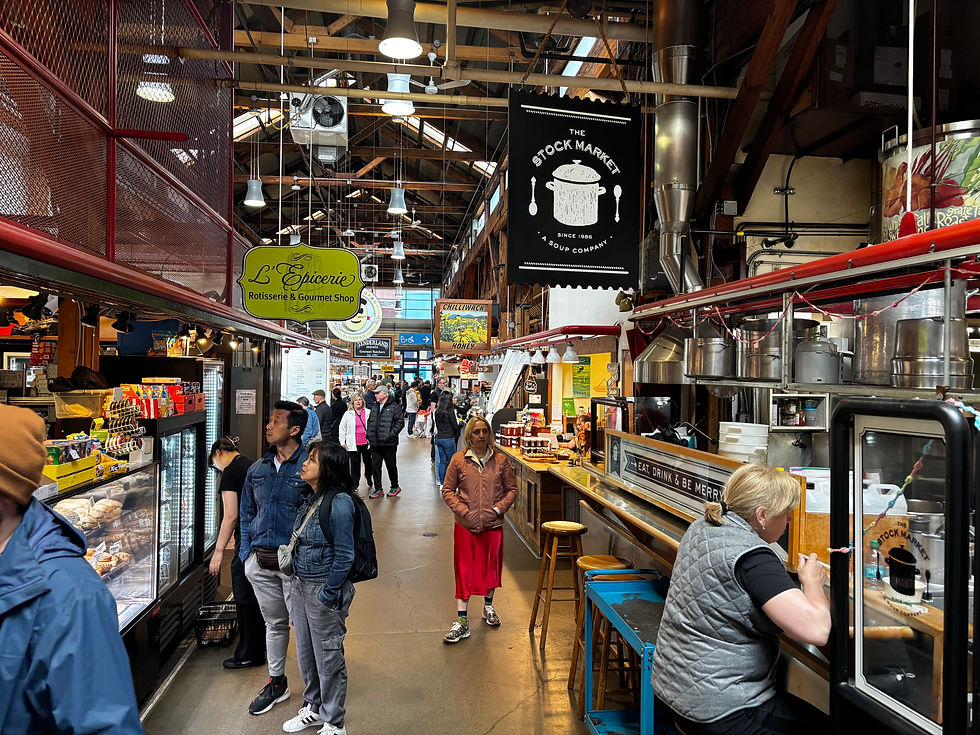


We also went to the Museum of Vancouver, which has several thought-provoking exhibits regarding the city's history and geography. Canadians are much more in tune with examining the bad things Europeans did to the native peoples and Asian immigrants over the last 300+ years than we are in the U.S.

We walked along the seawall in the amazing Stanley Park and saw some cormorants fishing as well as a few people. The city's seaplane terminal is next to the cruise ship docks; there were float planes leaving and landing every few minutes.


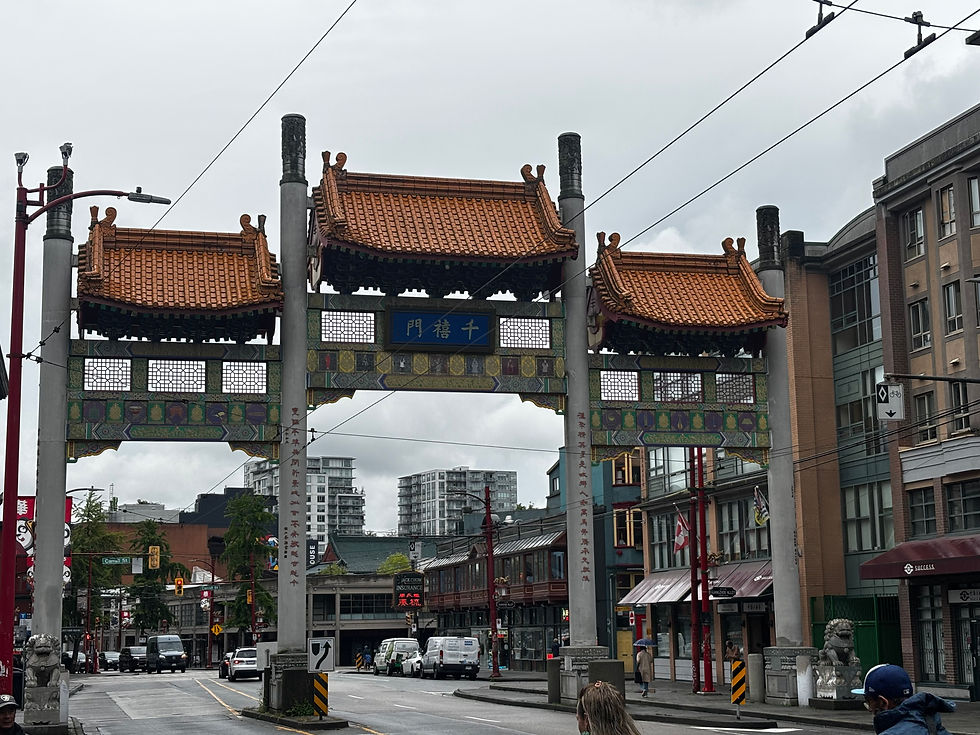
The next day we had breakfast at a great coffee shop and did a walk through Gastown and Chinatown, two older neighborhoods east of the city center. We also visited the excellent Vancouver Aquarium in Stanley Park, and had a nice lunch at Stanley's Bar and Grill in the park.


The next morning we said goodbye to Jeff and Samantha (for a few days) and headed to the Tsawwassen Ferry Terminal to catch our boat to the next stop in Canada.






Comments