Cascadia
- Phil Smith
- May 31
- 7 min read


The Cascade Mountain range extends from northern California, through Oregon and Washington and into southern British Columbia. Consisting mostly of volcanoes, it is one of the youngest mountain ranges in the world and is still active and growing. We drove along its entire length, marvelling at the snow-capped peaks with glaciers carving their sides.
Mt. Shasta


We left Lake Tahoe and headed north into very rural California, surrounded by evergreen forests and more significant burn areas. We encountered Lassen Peak first, mirrored over Lake Almanor. We proceeded to the town of Mt. Shasta, nestled along the west side of the volcano of the same name. It's a massive mountain with multiple peaks at the top, the result of tremendous eruptions over time.
We got there in time to chase a couple of waterfalls on a nice little hike in the woods through some very tall Douglas Firs and other trees.

The town itself is interesting, to say the least. New-age shops abound, and the grocery store we found was an organic mecca. The mountain has a reputation of being a spiritual place dating back to the Native American tribes who inhabited the area and that feeling continues today.
We had a late lunch at Bistro 107, sitting on their patio and enjoying the crisp sunny weather. The food was good and the local brews were even better.
Crater Lake
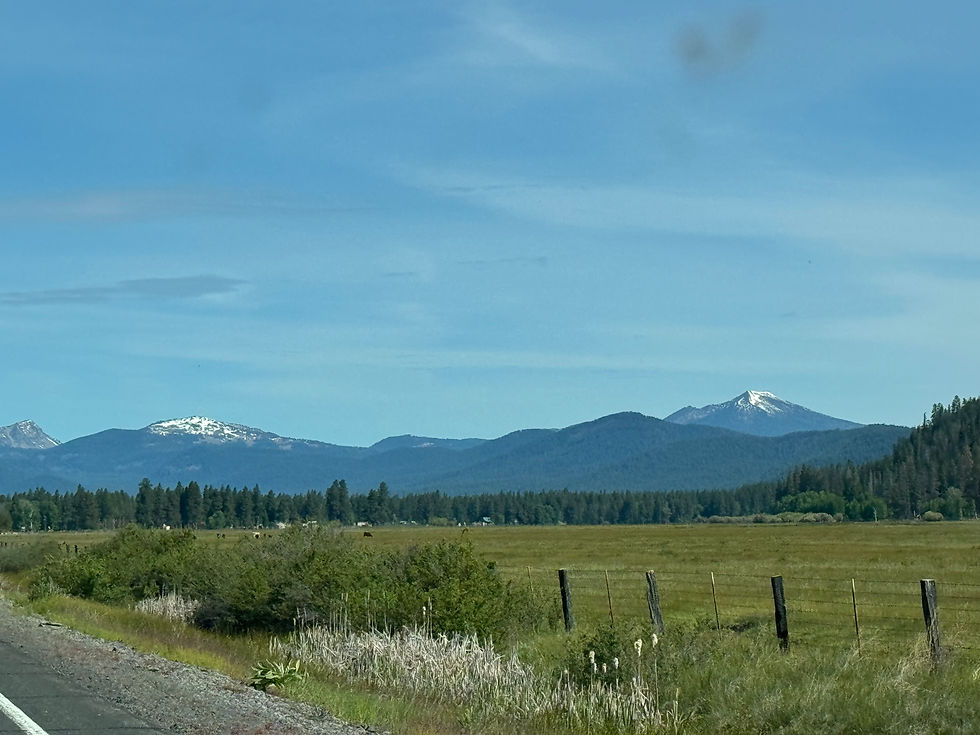
We woke up early the next morning to prepare for the longest day of driving so far on the entire trip, more than 7 hours in the car. First stop, Crater Lake in Oregon. To get there we passed through Butte Valley, a high mountain valley just south of the Oregon border that is surrounded by extinct and active volcanoes. It's almost all farms and is a major producer of the young strawberry plants you can buy at your local gardening store.
After you drive through Klamath Falls, Oregon (spoiler alert: there are no falls there) and pass the large shallow lake to its northwest, you begin approaching Mt. Mazama, which is the name of the volcano that contains Crater Lake. From the approaching highway, it's hard to get a grasp of the size of the peak and how it once looked, before it blew its top off, because the crater itself is so big.
But then you start climbing. The road winds up and up and up, eventually ending in a series of switchbacks right before you arrive at the rim of the crater. And it is one of the most spectacular things we've ever seen. We arrived in the morning before the wind picked up and the surface of the lake was like glass. The peaks around the rim were mirrored perfectly in the water.

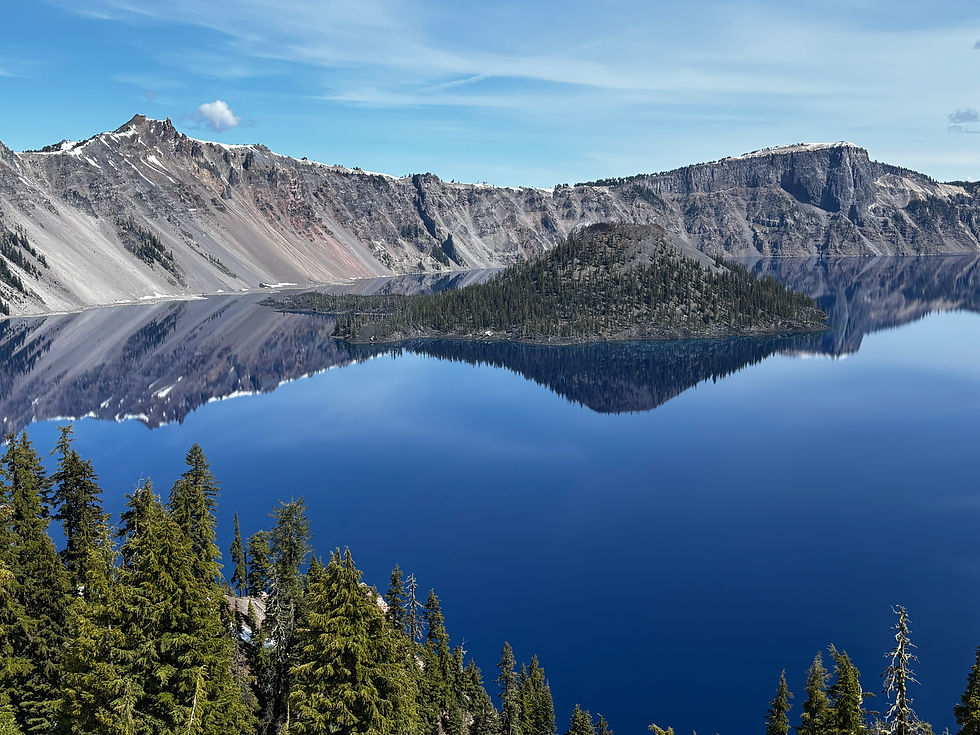

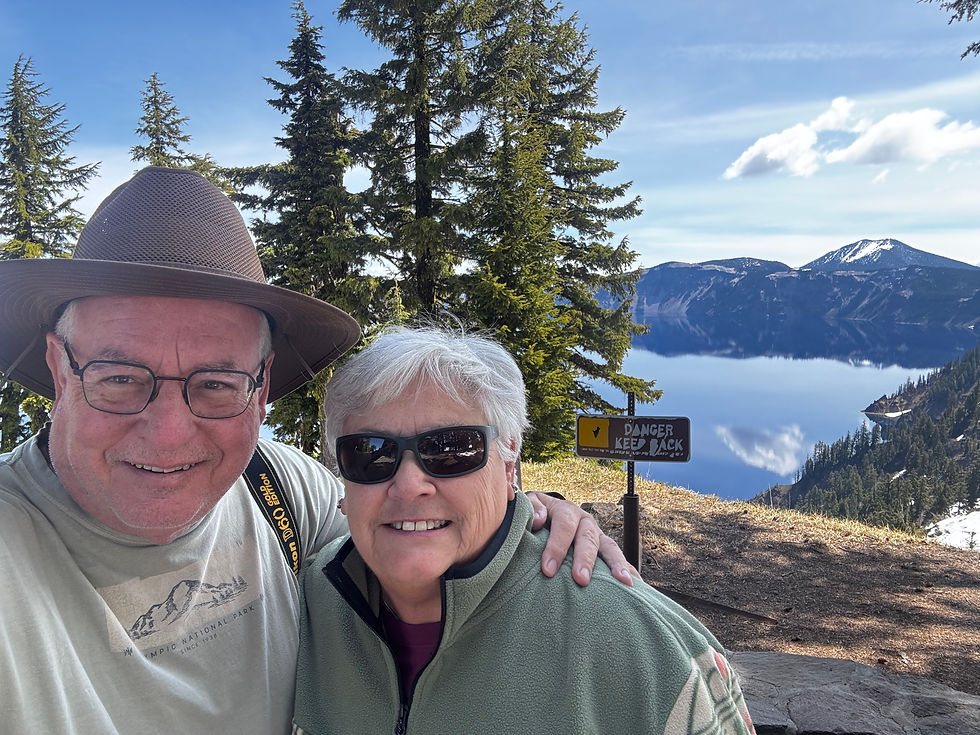
Words are hard to come by when describing the Lake. It is really stunning. There is no other lake like it in the world.
After about an hour, we made our way back down the mountain and headed northwest toward our next stop, the Willamette Valley, home to a number of vineyards and some great wine.

Wine Country #3
The Willamette Valley lies between the Cascades and Oregon's Coast Range. There are some good wines made in the southern part of the Willamette, closest to Eugene, but most of the wineries are in the north, west of Salem and going up to the Portland exurbs, all west of Interstate 5.
Almost all the red wines made there are Pinot Noir, although some are experimenting with other grapes as the weather gets warmer in the Valley. Chardonnay is the main white wine, although again there are other grapes grown here as well.
We learned about a winery called Illahe via a cooking/restaurant series we watched called The Lost Kitchen, which is now off the air. Illahe makes the Chardonnay they serve in that restaurant. The main person in the show, Erin French, travels to Illahe with her husband and cooks a meal there for the workers.
Without getting any more foodie-nerdy, it turns out that there is an AirBNB on the Illahe winery property and its kitchen is the one where Erin French cooked that meal. So, of course, we rented it for three nights. It was spectular, without a doubt the best place we have rented so far this trip.


We played our last round of golf on this journey at a nice local course and then shipped our clubs back to Virginia via UPS. We bought some fish at a market in Salem and Phil cooked it in that very same awesome kitchen.
The next day we tasted some wine at the Illahe winery and toured the cave where they age the wine in barrels. We went back to the house (because why not!) and Phil grilled some chicken kabobs. We sat outside next to the firepit and watched the sun set and the stars (so many stars!) come out. It was a really wonderful stay.
Portland
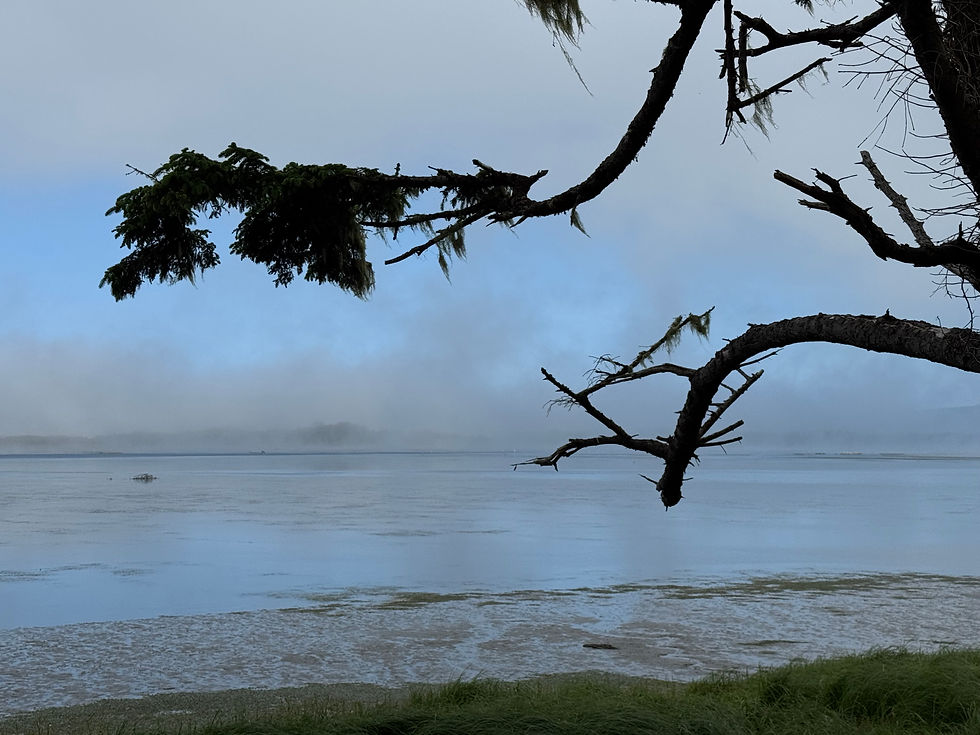
This was our second trip to Portland, but the last time we flew into the airport at night and didn't really see anything. This time we made our way over the Coast Range to the Oregon Coast and up along the coast road to visit the place where Jacobsen Salt is made. We learned about it on different food show and became capivated by it. It has a nice, clean flavor that we use for pretty much everything in our kitchen at home.

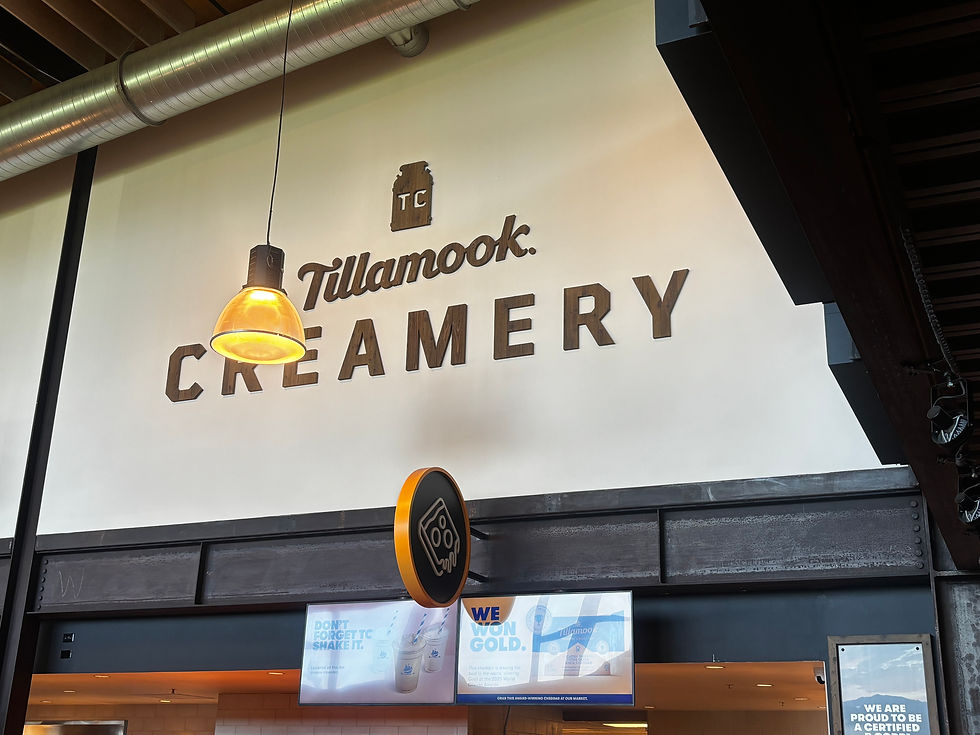
Then we visited the Tillamook Creamery where they make some pretty good cheese. We did a tour of the facility and tasted some aged cheddars which were quite good. We ate some amazing Mac and Cheese at the food court there.
We then made our way back over the Coast Range to Portland. Despite what you may have heard, it's a really nice city with really nice people. We have family there with whom we had some great visits, including going to a well-known rhododendron garden and an interactive immersive art space.
We also ate at one of the best Top Chef restaurants we've visited on the trip, kann. While we aren't used to Haitian flavors, that didn't really matter. The food was awesome. We got a treat and were seated at the Chef's Counter for the meal, which made the experience even more awesome.
Chef Gregory wasn't there that night but his Executive Chef led a team that was really outstanding. It was fascinating to see how a the kitchen in a high-end restaurant works. Highly recommend!

The next day we encountered our first issue with the car so far on this trip. After 6,000+ miles, one of our tires started losing pressure and dropped almost 50% overnight. Phil took it to a tire place in Portland which not only patched it within 45 minutes but didn't charge us for it. If you're ever in need of tires in the Portland area, make sure you go to a Les Schwab store. They are great!

We then drove up to Mt. St. Helens to see the famous volcano, which is only 60 miles or so north of Portland in Washington. You can see it from the city, along with the closer and much more symmetrical Mt. Hood volcano. We got a nice view of Mt. St. Helens from the west, but didn't take the longer drive to see the destruction on the north side of the mountain caused by the deadly 1980 eruption. That's for the next trip.


On the way back to Portland we stopped at a winery in the Columbia River Valley and enjoyed some good Washington wine and the beautiful sunny weather.
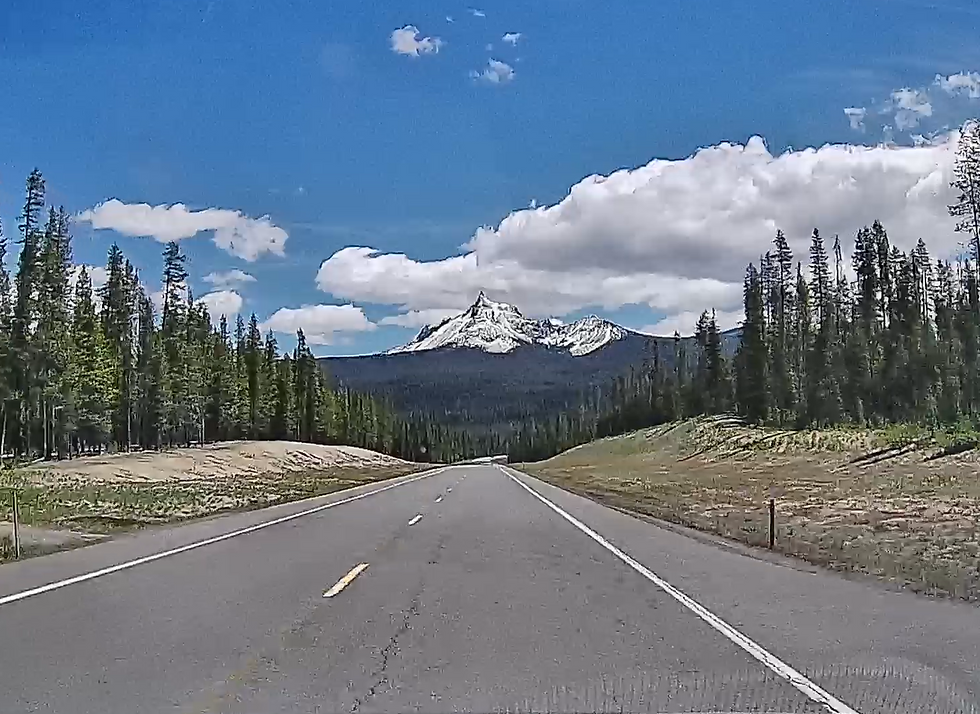
We set out the next morning to meet our son and his wife in Vancouver, British Columbia. They live in Washington, but we all thought it would be fun to spend a few days in Vancouver. Along the way we saw the tallest of the Cascade mountains, Mt. Rainer, which looms over the Seattle/Tacoma area, and then Mt. Baker, in far northern Washington.


Cascadia is a place where the earth is reborn from time to time. The forests are different from any others we have seen, and the scenery is often quite stunning. The native Americans who lived there for millenia before the Europeans came revered the mountains as sacred and still do. It's easy to understand why.







Comments